








[ad_1]
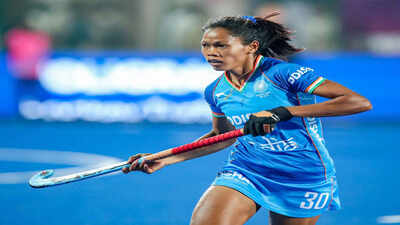
NEW DELHI: There is a quiet confidence surrounding the Indian women’s hockey team these days. Not just because they won the FIH Nations Cup in New Zealand, which saw them return to the FIH Pro League, but because the team believes they have finally found the balance between youth, experience and structure.Captain Salima Tete and forward Sunelita Toppo are the two faces of that transformation. For Salim, who took over as captain in 2023, leadership has been a journey of growth rather than authority. She admits that the role was daunting at first, especially as one of the younger players entrusted with leading a team full of experienced internationals.“In the beginning it was difficult because I didn’t know how to handle everything. I learned by sitting with seniors like Savita, Nikki and others, asking questions and understanding how to lead. I could barely speak before. Now I know that communication is one of the biggest responsibilities of a captain,” said Salima.That openness has helped create a locker room where every player is encouraged to contribute. According to the midfielder, leadership is shared, not imposed.“It’s not that the captain does everything. Every player takes responsibility. The juniors are also speaking now, and that’s very important to us.”That culture was evident during India’s Nations Cup triumph, where the team showed composure, resilience and tactical discipline. But Salima insists that the celebrations have already been put aside.“The victory is a nice memory, but now our focus is completely on the World Cup. We analyzed our performances, watched the videos and determined where we can improve. We’re just at the beginning.”India’s preparations are focused on sharpening the fundamentals while building on the physical improvements that have become increasingly visible over the past few years. Salima credited the support staff for raising the team’s fitness standards, saying improvements in agility, strength and recovery have helped the players reach the speed of international hockey.“If we focus on our strengths, play confidently and stay consistent, we can achieve good results. Each player has a different quality, speed, skills or passing and if everyone does their part well, we can compete with the best, said Salima.”Among those benefiting from the environment created by senior players is Sunelita Toppo, whose journey mirrors the rapid rise of Indian women’s hockey. The young forward, who scored in the Nations Cup final against New Zealand, said the moment was the reward for countless hours spent practicing specific match situations.“We prepared for that situation before the game. When the ball came to me, I stayed composed and performed what we practiced. I am happy that I could contribute to the team’s victory,” she said.Sunelita’s rise was anything but simple. Growing up in Odisha, she started playing hockey with a bamboo stick as her family could not afford proper equipment. Even the first hockey stick she got from her coach was broken.Those humble beginnings, however, make her appreciate how dramatically hockey infrastructure has developed in the state.“When I started, we played on muddy pitches. Now the young players start on the grass itself. There are grass pitches even near my village, so I can continue training whenever I go home. It has made a big difference.”She also highlighted the role of senior players in helping youngsters fit into the national set-up.“The coaches teach us the system, but the seniors explain the situations from their own experience. They never make us feel like juniors. They constantly guide us and that helped me a lot to improve,” said Sunelita.Both players believe India’s biggest improvement since the Tokyo Olympics has been its understanding of structure and fitness. While the hunger to win has always been there, Sunelita believes that the team’s tactical maturity has grown considerably under the current coaching group.With the upcoming Hockey World Cup and Asian Games, India knows that tougher challenges await it against the world’s elite. But if the Cup of Nations was a statement of intent, conversations inside the Indian camp reveal something equally important, a team that has stopped measuring itself by past performances and started believing it belongs among the best.The next few months will determine whether that belief translates into medals. For now, India enters the biggest phase of the cycle carrying not only momentum, but a renewed sense of purpose.
[ad_2]
Source link