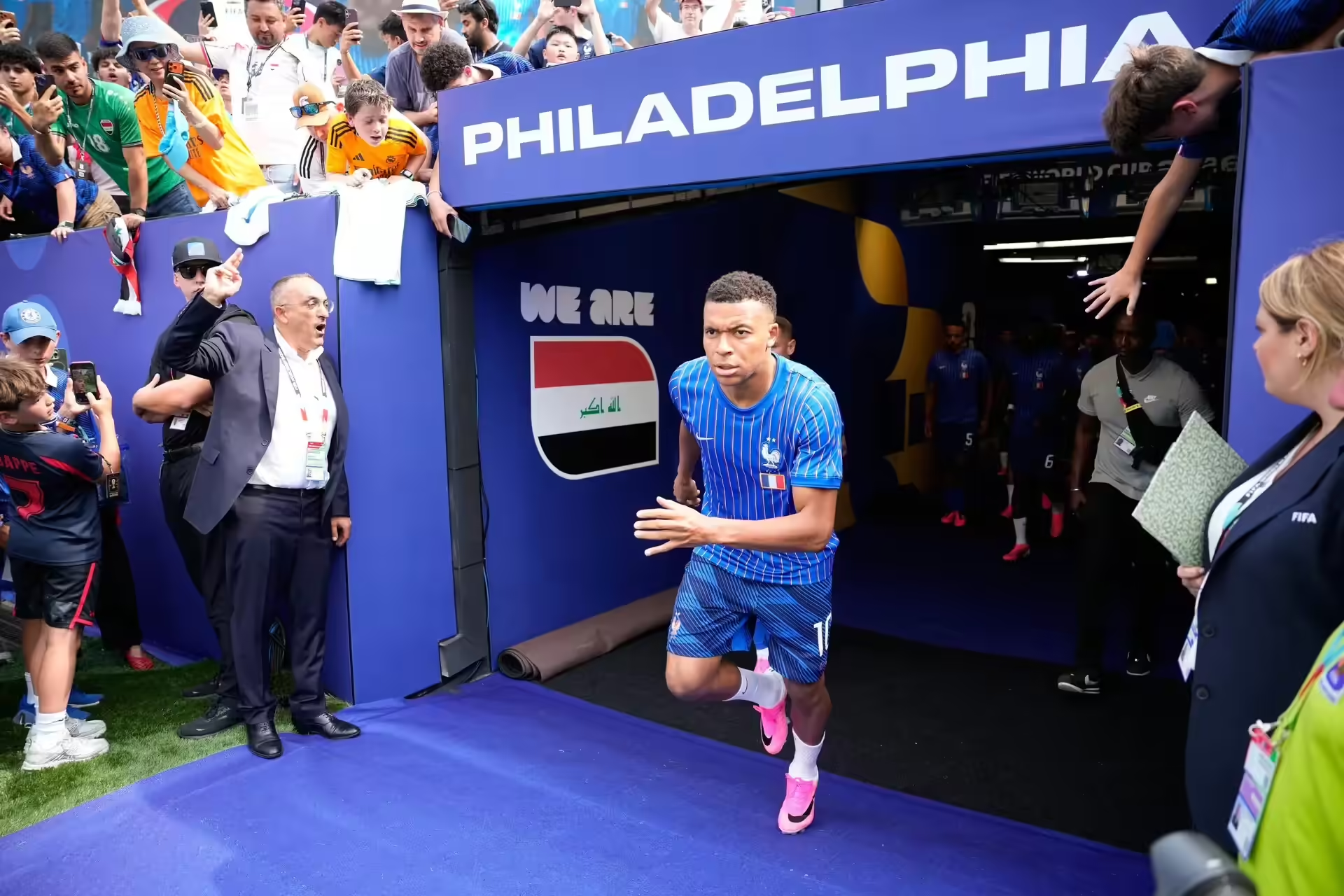










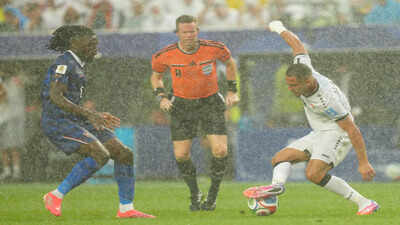
Kylian MbappeA first-half goal put France ahead before dangerous lightning over Philadelphia forced players and fans to seek shelter, creating the first weather-related suspension of the 2026 World Cup.France’s Group I meeting with Iraq in Philadelphia became the first game of the 2026 FIFA World Cup to be called off due to bad weather after thunderstorms and lightning forced officials to stop play at half-time.The stoppage followed an opening 45 minutes played in relentless rain at Lincoln Financial Field, where Kylian Mbappe’s 14th-minute goal gave France a 1-0 lead and moved Didier Deschamps’ side closer to securing qualification for the knockout stages. As conditions worsened throughout the Philadelphia area, FIFA’s severe weather protocols were activated and players and fans were instructed to evacuate exposed areas of the stadium.
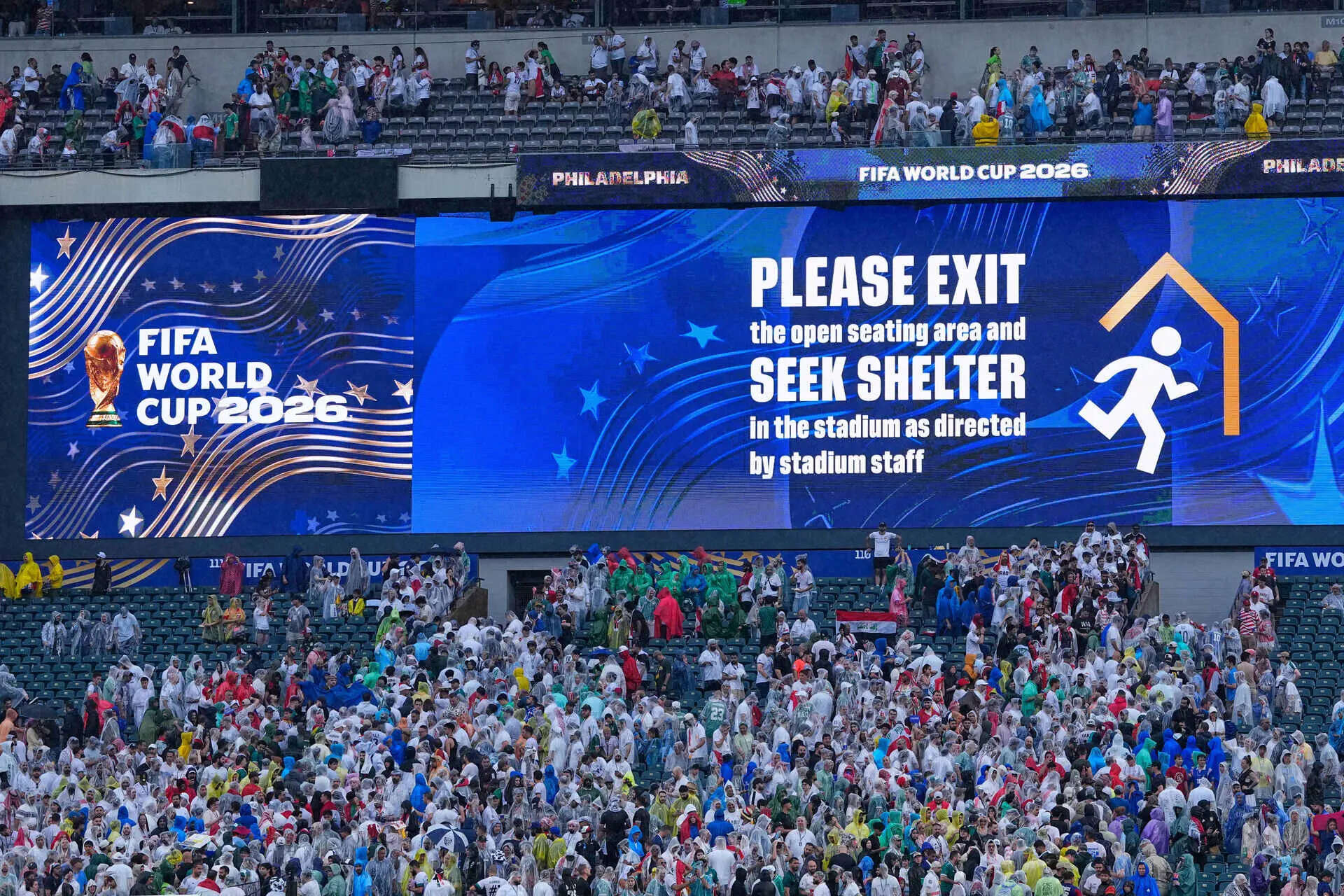
A sign advising fans to get out of their seats is shown as severe weather storms hit during the World Cup Group I soccer match between France and Iraq in Philadelphia, Monday, June 22, 2026. (AP Photo/Petr David Josek)
What was already the wettest half of soccer seen at the tournament to date quickly became a significant operational challenge for organizers, highlighting the long-discussed weather risks ahead of the World Cup, which has spread to the United States, Canada and Mexico during the height of the summer storm season.
Lightning forces FIFA to stop the game
The decision to stop the match was triggered by a dangerous lightning strike near the stadium during the break.According to protocols adopted throughout the United States, games must be held whenever lightning or an electrical discharge is detected within an eight-mile radius of the playing site. When that threshold is reached, players, officials and staff must leave the field, while fans are directed to protected areas inside the stadium.As the storm intensified over Philadelphia, fans who had spent much of the first half battling heavy rain either reached for ponchos or headed for the fields. Soon after, stadium screens instructed spectators to leave their seats and move to protected areas of the hall.
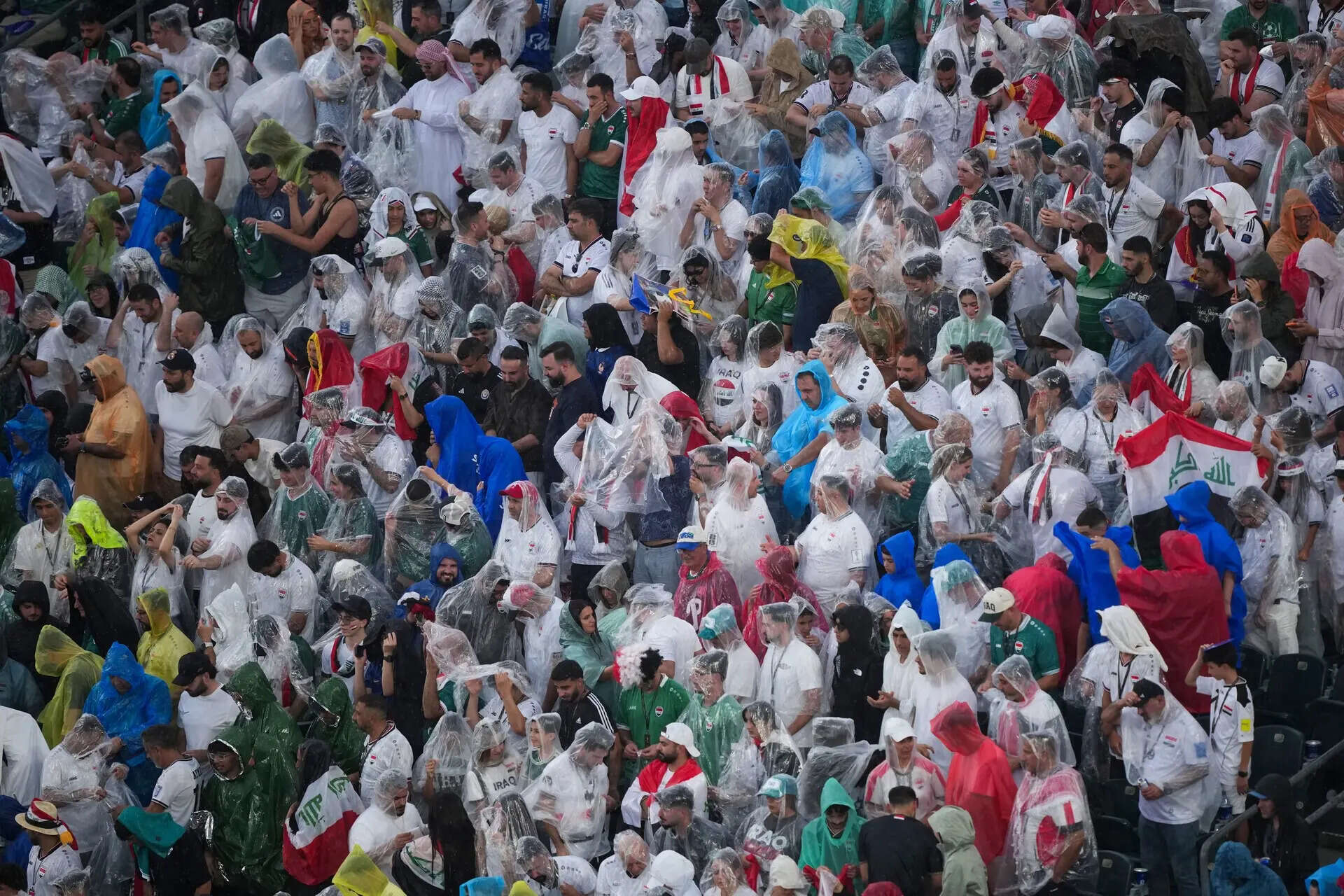
Fans wear ponchos to protect themselves from the rain during the World Cup Group I soccer match between France and Iraq in Philadelphia, Monday, June 22, 2026. (AP Photo/Matt Rourke)
The National Weather Service has issued a severe thunderstorm warning for the area until 7 p.m. ET, with forecasts warning of wind gusts approaching 60 mph as the storm system moves through the city.
An interruption that was expected before the start
The threat of inclement weather had already affected preparations long before the opening whistle.Hours before kickoff, stadium officials advised fans not to travel to Lincoln Financial Field due to hazardous conditions in the area. The opening of the gates was delayed after heavy rain, thunder and lightning swept through Philadelphia during the afternoon.A statement posted on social media by Lincoln Financial Field warned supporters: “Due to inclement weather in the region, the opening of the gates will be delayed.”The statement continued, “If you are not in the area, please do not travel to Philadelphia Stadium at this time.”“If you are near Philadelphia Stadium, please take cover.”Conditions improved enough later in the day that the gates were opened, allowing the game to start as scheduled at 5pm local time. The weather, however, never really relaxed and eventually escalated into the first major weather disturbance of the tournament.
How FIFA’s time delay system works
The suspension also provided the clearest example yet of the extensive bad weather planning put in place by FIFA and local authorities for the 2026 World Cup.The governing body has repeatedly stressed that it is working together with meteorological agencies and emergency management authorities in all 16 host cities. Last month, FIFA said its emergency preparedness team had conducted comprehensive drills throughout the tournament aimed specifically at severe weather conditions.Under current regulations, when lightning is detected within eight miles of the stadium, a countdown begins. There must then be no further lightning strikes within that radius for a full 30 minutes before play can resume.Each additional stroke immediately resets the watch to its initial state.After the final 30-minute waiting period is over, players are given an additional 15 minutes to warm up before the game resumes.
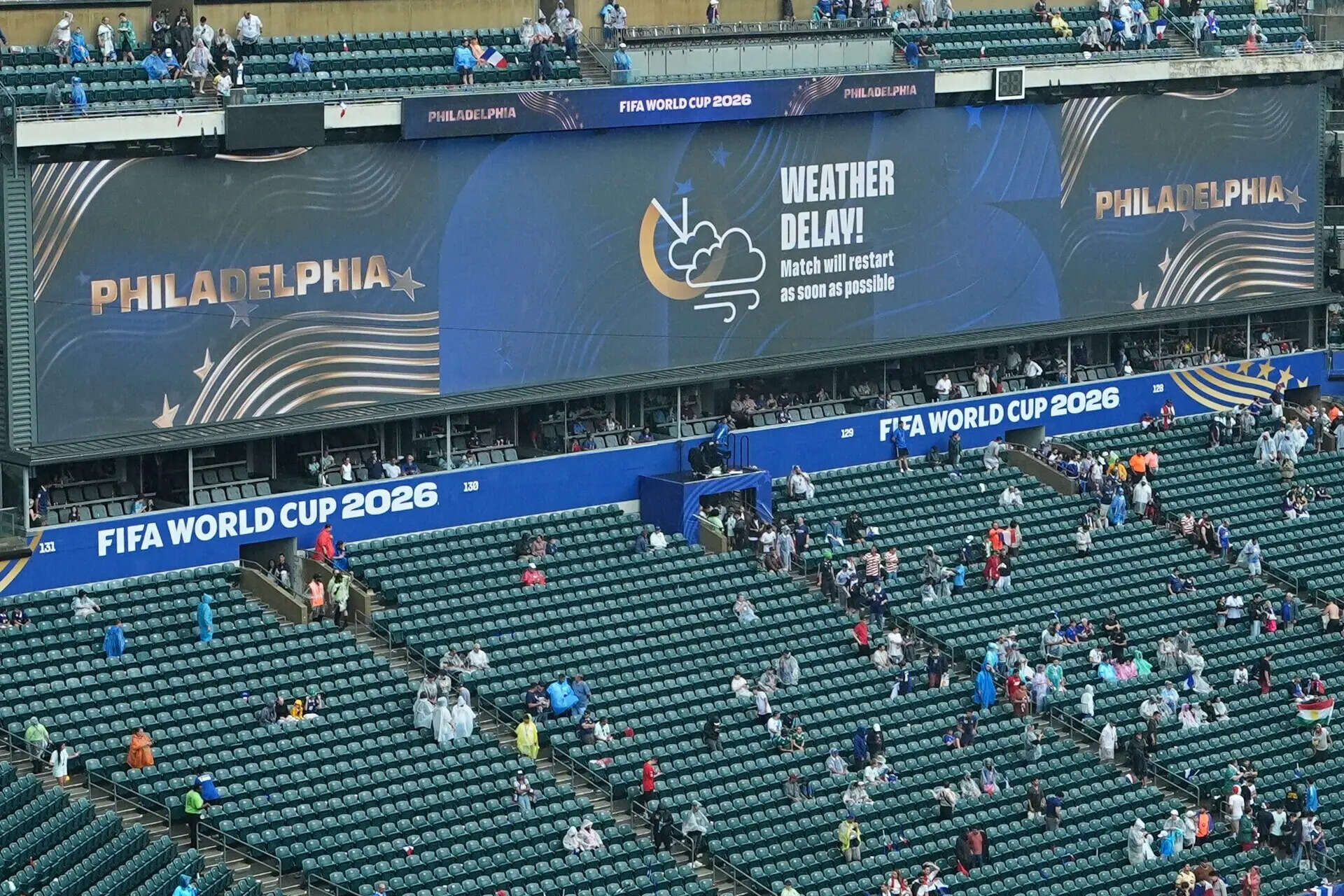
A sign informing fans of a weather delay is displayed during the World Cup Group I soccer match between France and Iraq in Philadelphia, Monday, June 22, 2026. (AP Photo/Matt Rourke)
Reports from Philadelphia suggested the delay had already extended past the minimum 30-minute threshold as new lightning strikes continued to be detected around the stadium, repeatedly triggering the countdown.
What the postponement means for the tournament
The incident represents the first stoppage of a match at the World Cup, but the organizers have long recognized the possibility of such scenarios given the tournament’s summer schedule.Unlike many other sporting events, there is no fixed maximum length of weather delay. Matches can be suspended for hours if necessary, with FIFA assessing each situation individually before determining whether a postponement is unavoidable.
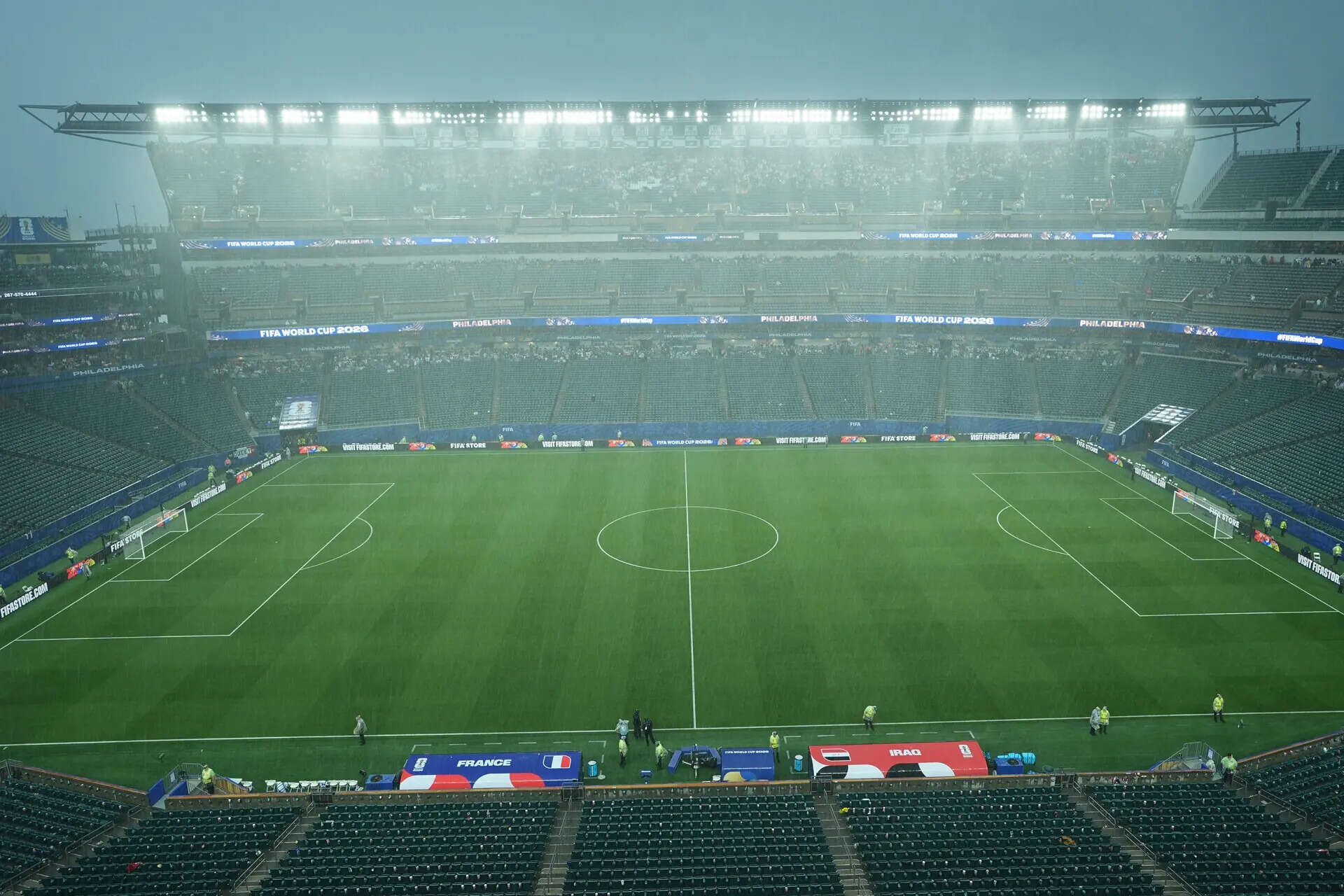
A general view of the stadium during a thunderstorm during the World Cup Group I soccer match between France and Iraq in Philadelphia, Monday, June 22, 2026. (AP Photo/Matt Rourke)
That flexibility becomes especially important in the 48-team World Cup, where any delayed game could create significant scheduling complications. The challenge becomes even greater later in the group stage, when the final round matches are played simultaneously to prevent teams from gaining an advantage by knowing other results.For now, France are in control on the pitch thanks to Mbappe’s first-half strike, but the immediate focus has shifted from soccer to ensuring the safety of everyone inside Lincoln Financial Field as tournament organizers wait for conditions to improve in Philadelphia.