








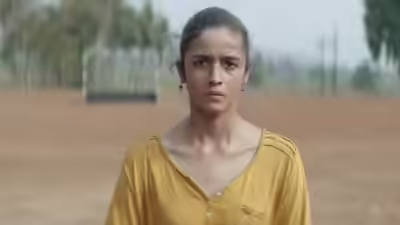

A decade after the release of ‘Udta Punjab’, the director Abhishek Chaubey He looks back on the film as an important chapter in his filmmaking journey. Released in 2016, the drama tackled Punjab’s drug crisis through multiple inter-related storylines Shahid Kapoor, Alia BhattDiljit Dosanjh and Kareena Kapoor Khan.Over the years, the film has been part of conversations around censorship, socially relevant storytelling and memorable performances. Among the cast members, Alia Bhatt’s portrayal of a migrant worker trapped in a cycle of addiction is often considered the standout performance of her career.
Alia Bhatt was ready for the challenge
Reflecting on Alia’s preparation for the role of Mary Jane, Abhishek said the actor is fully committed to understanding the emotional and physical trauma experienced by her character.Speaking to Variety India, he shared, “Alia faced the challenge of playing such a tough part. It couldn’t have been easy, but she was a sport. We talked a lot about what her character, Mary Jane, goes through. I told her exactly what the experience does to the character’s body and mind. It must have been exhausting for her, but she was stoked.”The filmmaker explained that the extensive discussions helped shape the character’s journey and allowed Alia to immerse herself in the demanding role.
Controversy over ‘Udta Punjab’
Although ‘Udta Punjab’ has become one of the most talked about films of its time, Chaubey says that creating controversy was never the intention of the project.“I think, though, it wasn’t my intention to make a controversial film. I just wanted to make an exciting and entertaining film and to reach out to the public at large on this issue.”The film sparked nationwide debate due to its portrayal of substance abuse and the social reality of Punjab. However, according to Chaube, the primary goal was to tell a compelling story while drawing attention to a serious topic.How Tommy Singh became Shahid Kapoor?One of the most talked about aspects of the film was Shahid Kapoor’s transformation into the eccentric rockstar Tommy Singh. Chaubey revealed that the character developed gradually and drew inspiration from multiple sources rather than a single real-life person.“Tommy was based on a lot of people. It eventually evolved into a fairly basic character. I also have to give credit to Shahid for creating that character. He also brought his own imagination and ideas to create the personality.”The director also recalls being pleasantly surprised by Shahid’s immediate enthusiasm for the role.“He really enjoyed the script and immediately said yes. I was surprised. He told me he saw it as a great opportunity. He said, ‘How many times do I get to play a character as crazy as this?'”
Abhishek Chaubey responded to the criticism about the image of Punjab
After its release, ‘Udta Punjab’ faced criticism from some quarters for allegedly portraying the state in a negative light. Chaubey, however, maintained that the film arose from a place of concern rather than judgment.“If we don’t talk about our problems honestly and openly, how can we expect to solve them? This attitude has to change. Our intention was never to tarnish any image. We come from a place of love and compassion.”The filmmaker believes that cinema can play a role in encouraging dialogue around difficult social issues.
Abhishek Chaubey is returning to the world of ‘Udta Punjab’ with a sequel
Although the film continues to attract new audiences ten years after its release, Chaubey says a sequel was never part of his plans. “A sequel was not in my mind. I don’t even watch my films.”The director is currently focusing on his next project, an action-drama series that is expected to go on floors next month. As ‘Udta Punjab’ completes a decade, the film continues to be remembered for its acting, its social commentary and the conversations it has sparked across the country.