








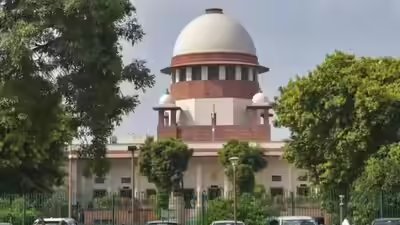
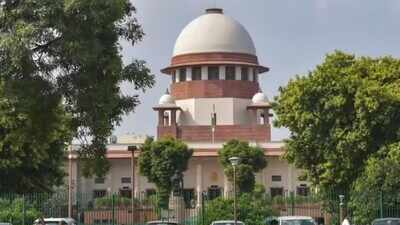
The Supreme Court on Wednesday dismissed a plea filed by an Economically Weaker Section (EWS) candidate who questioned how the Rs 8 lakh annual income limit for EWS eligibility could be reconciled with the high fees charged by private medical colleges.A bench of Justices BV Nagarathna and Joymalya Bagchi upheld an order of the Rajasthan High Court holding that the fee structure fixed by the State Fees Regulatory Commission was legally valid.During the hearing, Justice Nagaratna said private universities cannot be expected to charge the same fees as government institutions.“You cannot say that private education institutions charge the same fees as government institutions. That’s impossible. One cannot say private is too expensive, so make it government-like. These are self-financing institutions. For the government’s… they get grants (subsidy) from the state. This is a crucial distinction,” she observed.Referring to the earlier Supreme Court ruling, the bench added, “See TMA Pai. Capitation payment is prohibited…but that does not mean that general university fees cannot be charged.”The court also highlighted the role played by private institutions in medical education. “The assistance provided by private medical colleges to the state in the field of medical education will cease… We need doctors,” Justice Nagaratna said.Regarding affordability concerns, she said: “If you can’t afford it… get scholarships… subsidies…”The petitioner argued that the annual tuition fee for private medical colleges in Rajasthan ranges between Rs 18.90,000 and Rs 25,000,000. According to him, candidates from families with an annual income of up to Rs 8 lakh cannot actually afford such education, making the EWS quota ineffective in practice.However, the Rajasthan High Court had earlier rejected this argument. It noted that the fee structure was fixed by the State Fees Regulatory Commission based on the Supreme Court’s decision in Islamic Institute of Education v. State of Karnataka.The High Court also held that the EWS reservation applies only at the admission stage and does not entitle students to subsidies or fee reductions in private universities. It also noted that there is no legal requirement for private institutions to provide fee concessions to EWS students.The court declined to interfere with the ruling, saying: “We find no grounds to interfere with the High Court’s order. Dismissed. Legal questions, if any, remain outstanding.”