









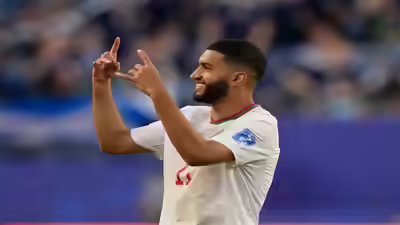

Morocco secured their first win at the 2026 FIFA World Cup with a 1-0 victory over Scotland, but the defining story of the night went to Ismael Saibari, whose record-breaking goal after just 71 seconds not only settled the contest, but secured his place in Moroccan football history.The Group C encounter at the Boston Stadium in Foxborough had great significance for both nations. Scotland arrived on the back of a narrow 1-0 win over Haiti, while Morocco earned an impressive 1-1 draw against Brazil in their first game. A win would bolster both sides’ hopes of reaching the knockout rounds, and Morocco seized the opportunity almost immediately through one of the tournament’s rising stars.Saibari’s goal proved to be enough to separate the teams, lifting the Atlas Lions to four points from two games and significantly improving their chances of reaching the last eight. In the process, the PSV Eindhoven midfielder became the fastest goal scorer at the 2026 World Cup and the first ever Moroccan player to score in back-to-back World Cup matches.For a player appearing in his first World Cup, it was another remarkable chapter in a rise that has accelerated rapidly over the past two years.
The goal that changed the game and the tournament record book
It took Morocco just over a minute to take control. Right from the opening exchanges, Brahim Díaz spotted space behind the Scottish defense and delivered a precise pass that opened up the backline. Saibari timed his run perfectly, latched onto the ball and calmly finished to give Morocco a 1-0 lead after just 71 seconds.
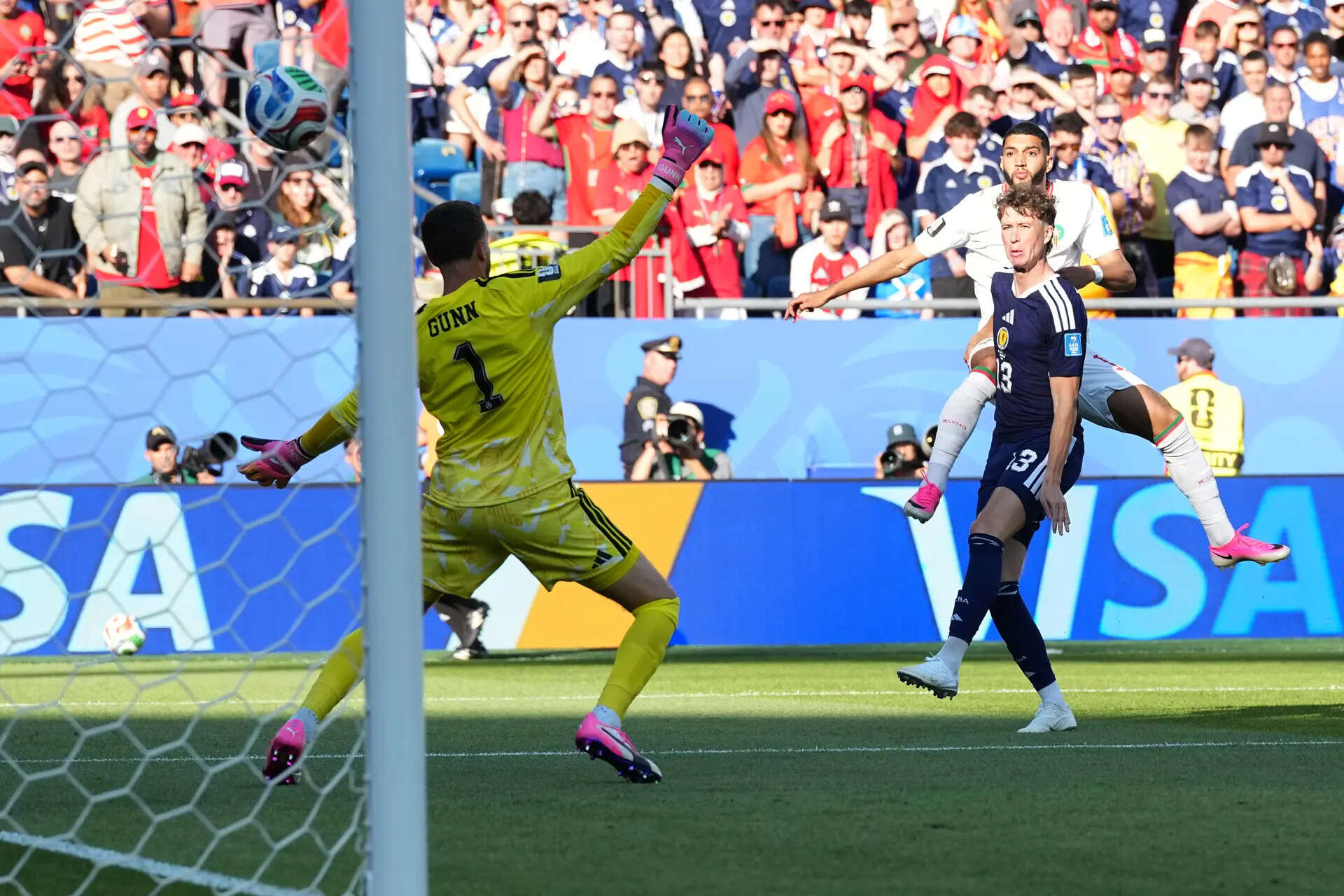
Morocco’s Ismael Saibari, top right, scores the first goal for his team during the World Cup Group C soccer match between Scotland and Morocco in Foxborough, Mass., near Boston, Friday, June 19, 2026. (AP Photo/Martin Meissner)
The goal underwent a brief semi-automated VAR check before it was officially confirmed, but the decision was never called into question. Morocco made progress and Saibari broke the tournament record.His goal moved straight to the top of the list of fastest goals at the 2026 World Cup, comfortably beating the previous mark held by Czech midfielder Michal Sadílek, who scored after five minutes and eight seconds against South Africa.
- Ismael Saibari (Morocco v Scotland) – 71 seconds
- Michal Sadílek (Czech Republic vs. South Africa) – 5 minutes, 8 seconds
- Felix Nmecha (Germany vs Curaçao) – 5 minutes, 16 seconds
- Damián Bobadilla own goal (Paraguay vs. United States) – 6 minutes, 12 seconds
The goal also became the fastest World Cup goal ever scored by a Moroccan player, adding another record to an increasingly impressive collection.
The first Moroccan to score in consecutive World Cup matches
Saibari has already introduced himself to the world audience during Morocco’s first match against Brazil.On his World Cup debut on 14 June 2026, he scored a spectacular goal over Brazil goalkeeper Alisson, helping Morocco secure a valuable 1–1 draw against one of the tournament favourites.Five days later, that goal was followed by another decisive contribution against Scotland.By scoring in his first two World Cup appearances, Saibari became the first and only Moroccan player in history to score in consecutive World Cup matches.
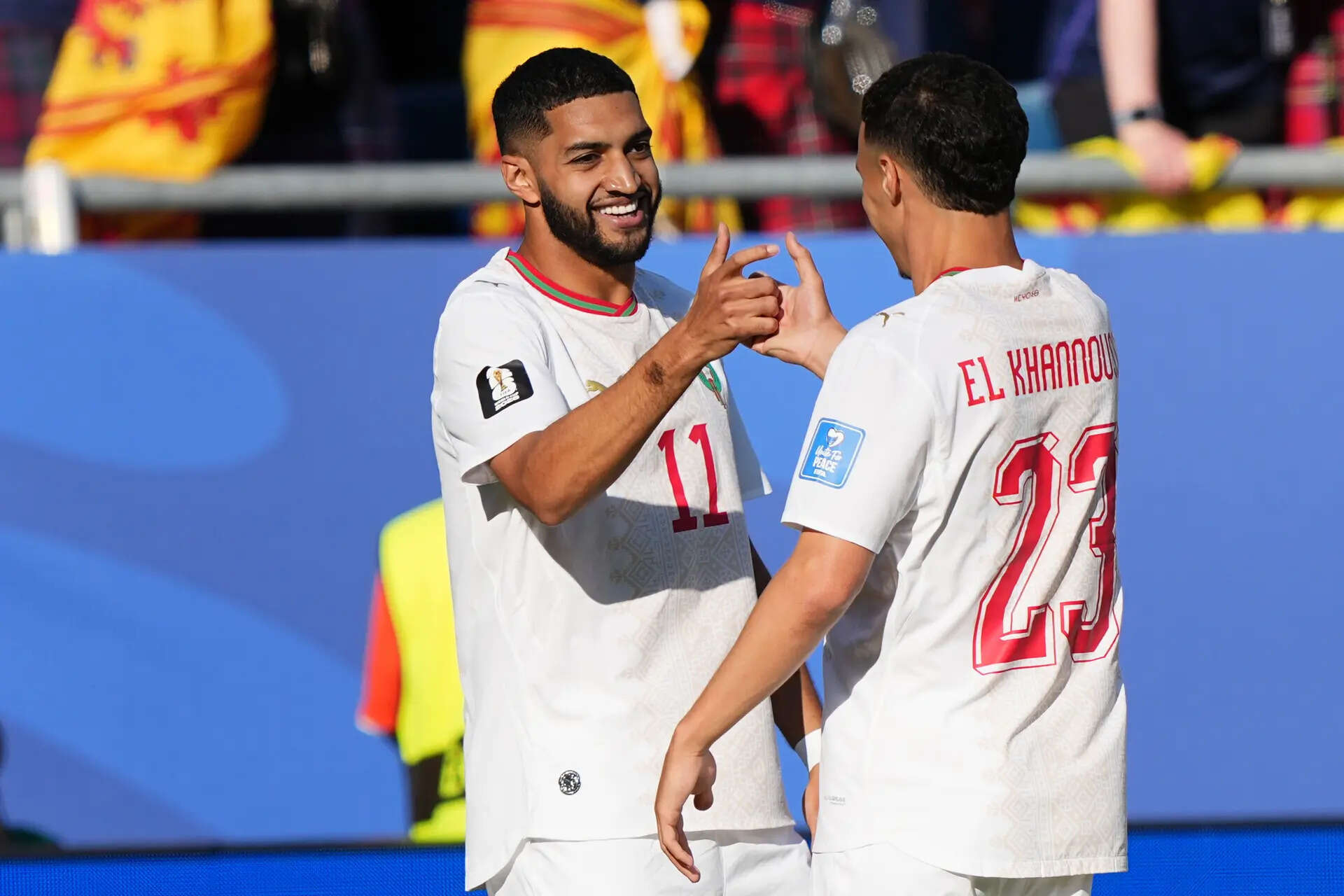
Morocco’s Ismael Saibari, left, is congratulated after scoring his team’s first goal during the World Cup Group C soccer match between Scotland and Morocco in Foxborough, Mass., near Boston, Friday, June 19, 2026. (AP Photo/Martin Meissner)
The difference is important compared to previous Moroccan records. Youssef En-Nesyri remains the first Moroccan player to score in two separate World Cup tournaments, having scored in both 2018 and 2022. However, those goals did not come in consecutive World Cup matches.Saibari’s achievement therefore stands alone in the history of Moroccan football.His achievement also places him in rare continental company. He is only the second African player ever to score in each of his first two career World Cup appearances, joining Egypt’s Mohamed Salah.
A player Morocco have struggled to secure at international level
Saibari’s international story is almost as interesting as his club career.Born in Spain and raised in Belgium, he had the right to represent several countries through his origins and upbringing. His dual citizenship status meant that several international routes were available to him over the years of his development.Morocco ended up winning that race.Former Belgium coach Roberto Martínez, who later became Portugal head coach, was among the prominent figures who admired Saibari’s talent as his reputation continued to grow across European football. Morocco, however, successfully integrated him into their national team and assured him of an international future.He made his debut for the Moroccan senior national team on September 12, 2023 in a 1-0 friendly win against Burkina Faso.Although he was not part of the historic Morocco squad that reached the semi-finals in Qatar 2022, he quickly became an important figure in the next generation of Atlas Lions players.
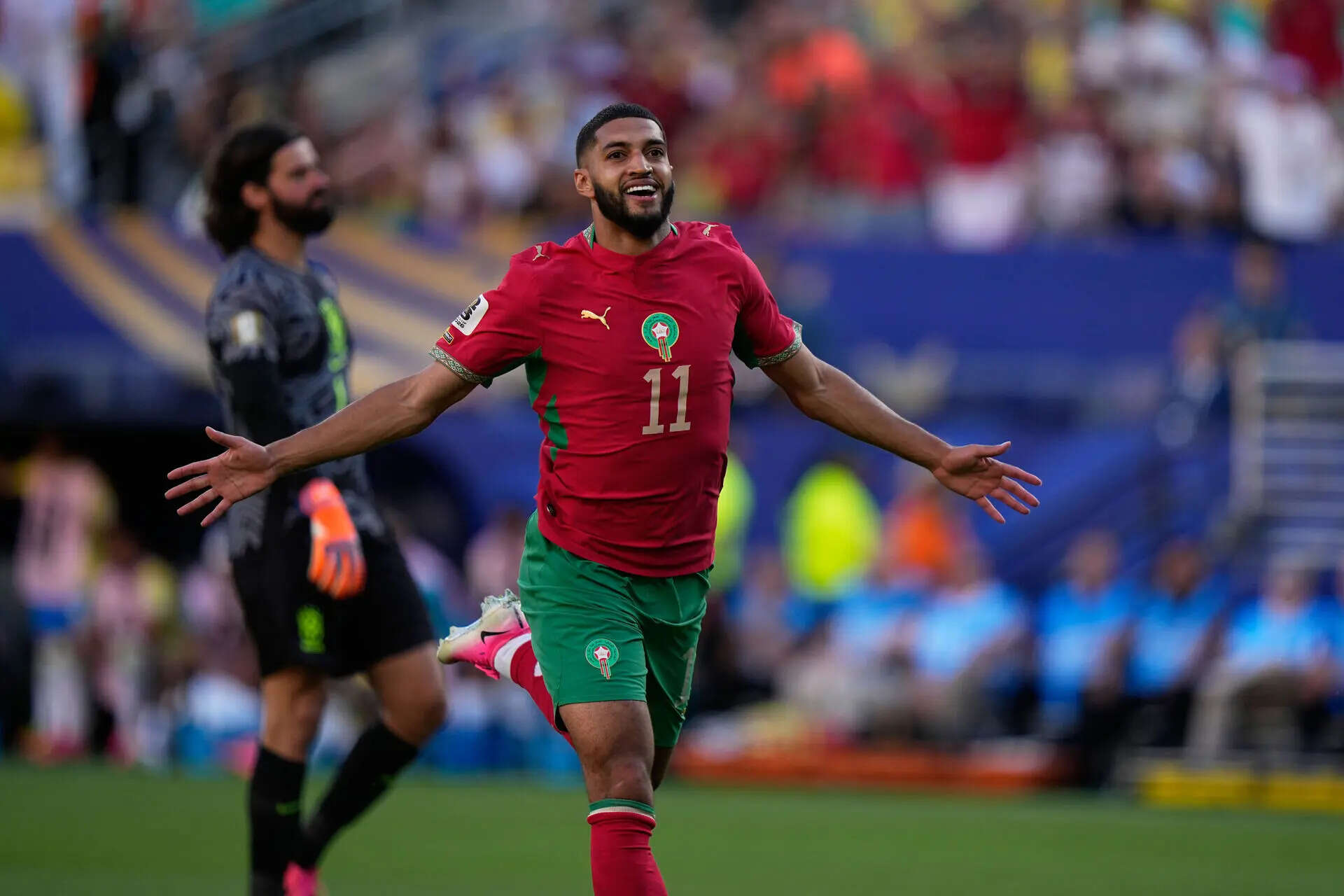
Morocco’s Ismael Saibari celebrates his team’s opening goal against Brazil during a World Cup Group C soccer match in East Rutherford, N.J., near New York, Saturday, June 13, 2026. (AP Photo/Frank Franklin II)
Before coming to the World Cup, he had already shown the ability to influence matches in international colours. In addition to his contribution to the qualifiers, he also scored two goals against Madagascar in a friendly match, further strengthening his growing reputation within the national team.
From Belgian academies to Bayern Munich
The 2026 World Cup may be Saibari’s first appearance on football’s biggest stage, but his rise has been built on years of steady development.Born in Spain before moving to Belgium as a youngster, he progressed through several respected academies including Willebroek, Beerschot and Anderlecht before joining Genk in 2017.He signed his first professional contract at Genk and gained valuable experience in elite youth competitions, including the UEFA Youth League.His next big step came in July 2020 when PSV Eindhoven brought him to the Netherlands.Saibari initially played for Jong PSV in the Dutch second division, where he played more than 50 games and developed the physical and tactical qualities needed for senior football.His first-team debut came under Roger Schmidt on 1 November 2020. The COVID-19 outbreak in the senior team created an unexpected opportunity, and the then 19-year-old came on as a substitute during a 4–0 Eredivisie win against ADO Den Haag.Over the following seasons he alternated between the reserve and senior sides before fully establishing himself under Ruud van Nistelrooy.That progression eventually turned him from a promising prospect into one of the Eredivisie’s standout performers.
MVP of the Eredivisie, an estimate of 40 million euros and a move to Bayern
Saibari’s progress reached a new level during the 2025-26 season.He helped PSV secure a third consecutive Eredivisie title and scored 15 goals during the league campaign, performances that earned him both the Eredivisie MVP award and the Eredivisie Player of the Year honor.His displays raised his profile across Europe and significantly increased his market value.According to his latest Transfermarkt profile, Saibari currently has a market value of €40 million.Interest from elite clubs soon followed, and Bayern Munich moved decisively to secure his signature.The German champions have reached a full agreement with PSV Eindhoven for a transfer value between 52 and 55 million euros, setting a new record for outgoing transfers for the Dutch club. Saibari has already completed his medical and signed a contract until the summer of 2031.The move is expected to be officially announced in early July, although all the main elements of the transfer have already been agreed.
Transferring the qualifying form to the world stage
What makes Saibari’s impact at the World Cup less surprising is the consistency he has shown throughout Morocco’s qualifying campaign.The Atlas Lions dominated CAF Group E, winning all eight matches, scoring 22 goals and conceding just two.Saibari scored three goals during that streak.He scored twice against Niger in a decisive 5-0 win that officially secured Morocco a place at the 2026 World Cup, netting in the 29th and 38th minutes. He then added another goal in a convincing 4-1 win over Gabon, beating defenders before scoring late on in the 90th minute.Those contributions helped Morocco comfortably qualify for the expanded 48-team tournament.Now he has taken that form directly onto football’s biggest stage.Morocco entered the competition hoping to build on recent success and challenge for another deep World Cup run. They remain unbeaten two games into the tournament after drawing with Brazil and defeating Scotland, with Saibari scoring in both matches.For Morocco, the immediate reward is a crucial victory and a stronger position in Group C. For Saibari, the evening represented something even greater. In the space of 71 seconds, he scored the tournament’s fastest goal, became the first Moroccan player to score in back-to-back World Cup matches, cemented his status as one of Africa’s most exciting young midfielders and continued a remarkable journey that took him from youth schools in Belgium to the prize of joining Bayern Munich as one of the breakout stars of the 2026 FIFA World Cup.