









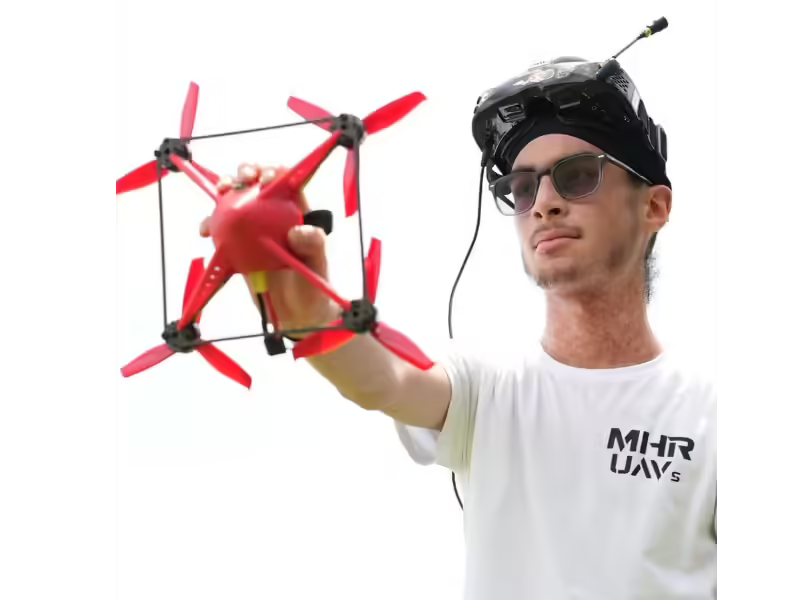
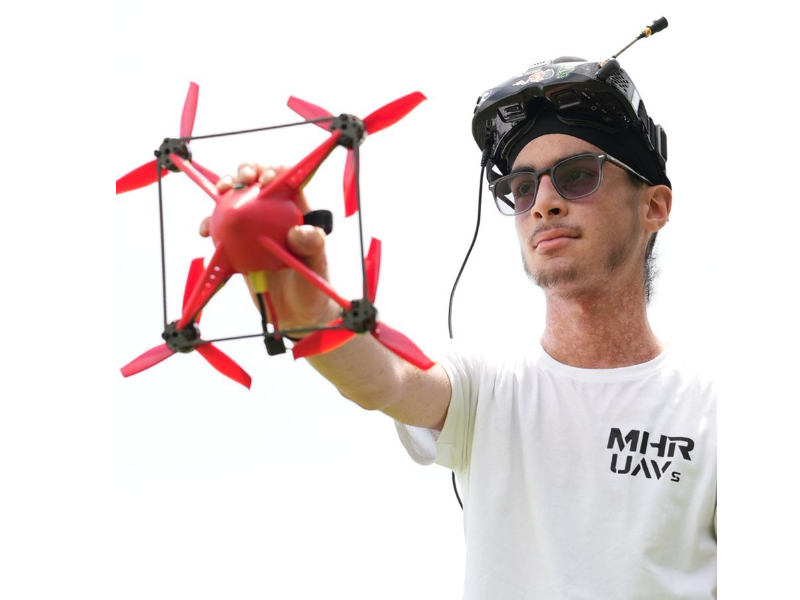
Mehar Singh, who was just 17 years old, came into the limelight by breaking the Guinness Book of Records for the fastest 100 meter ascent in a quadcopter. Mehar’s custom-designed drone reached this milestone in an astonishing 0.91 seconds, which not only demonstrates its technical prowess, but also sets a new benchmark in the rapidly evolving world of drone technology. Mehar’s path to this achievement was simple. His fascination with drones began in 8th grade and has deepened over the years. Keen to push technological boundaries, Mehar embarked on a month-long project to create a drone capable of unparalleled vertical acceleration. “I’ve always been fascinated by the idea of pushing the limits of what drones can do,” explained Mehar. “But breaking the world record wasn’t just about the end result, it was about the process. I wanted to prove that existing technology could achieve something extraordinary, but the road to get there was fraught with challenges.” The project required Mehar to design, test and improve multiple drone prototypes. “There were moments when I felt like I was chasing an impossible dream,” recalls Mehar. “I went through countless designs and many of them failed during testing. Some drones crashed so badly that I had no choice but to go back to the drawing board and start from scratch. Every accident was a failure, but it also led to new ideas and innovations.“ Undaunted by failure, Mehar put his energy into creating a drone that was not only fast, but also aerodynamically optimized. “I spent countless hours in CAD software, carefully designing and fine-tuning each component. The goal was to make the drone as streamlined as possible, which led to its shape like a rocket. This design wasn’t just about aesthetics; it was about reducing drag and maximizing speed. Mehar’s dedication to his craft has paid off spectacularly. “Every failure has taught me something valuable,” he said. “It forced me to think creatively and consider every detail, from the materials used to the weight distribution of the drone. The process was exhausting, but seeing my ideas come to life was also incredibly rewarding.”
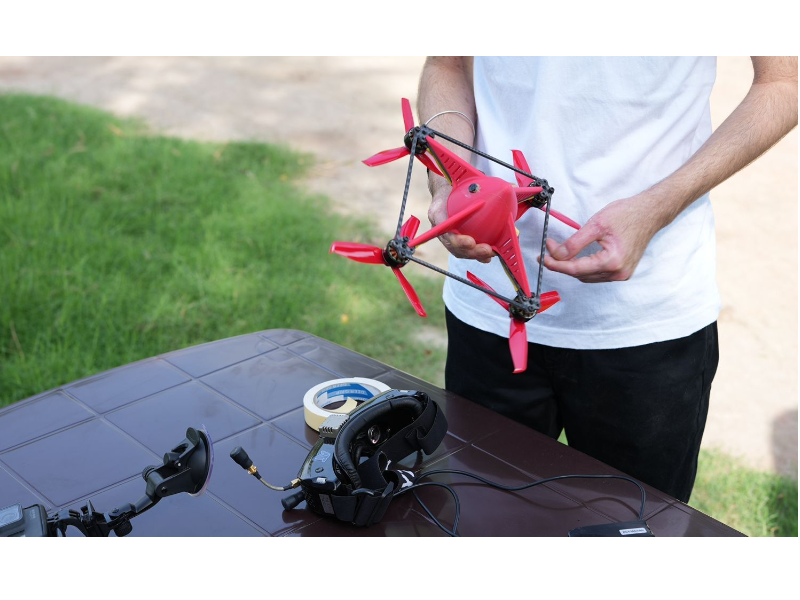
This record-breaking achievement is not Mehar’s personal triumph; has significant implications for the future of drone technology. The possibilities are endless, thought Mehar. “High-speed vertical acceleration could revolutionize everything from emergency response to space exploration. It’s not just about setting records, it’s about opening the door to new innovations and applications.“ Mehar’s groundbreaking work has already begun to inspire others in the drone community and beyond. “I hope this achievement will encourage other young innovators to push their limits,” he said. “Technology is evolving rapidly and there is so much potential waiting to be unlocked. I’m excited to see where we can go from here.”
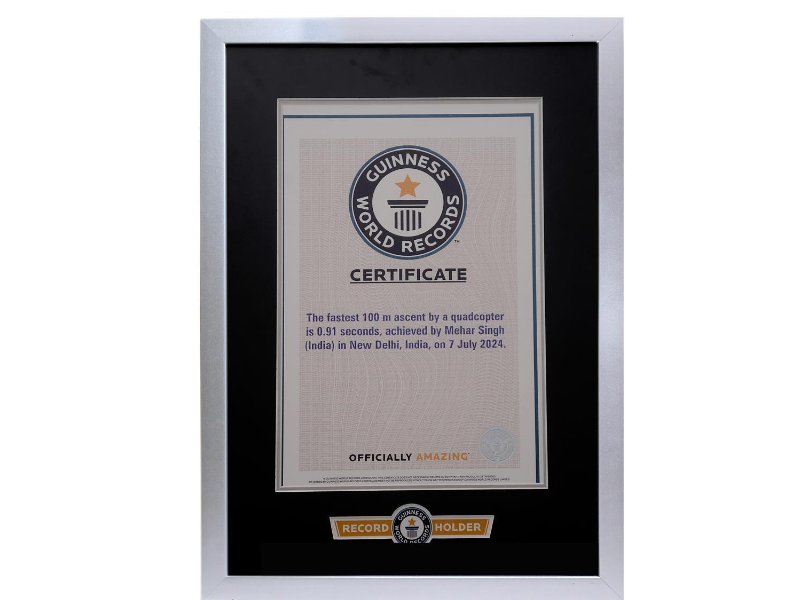
As Mehar looks ahead, the sky really is the limit. He not only made history with his record-breaking drone, but also set the stage for future advancements in drone technology. And for this young innovator, this is just the beginning of an exciting journey into the future of flight.
Disclaimer: Content developed by Mediawire on behalf of Shweta Singh